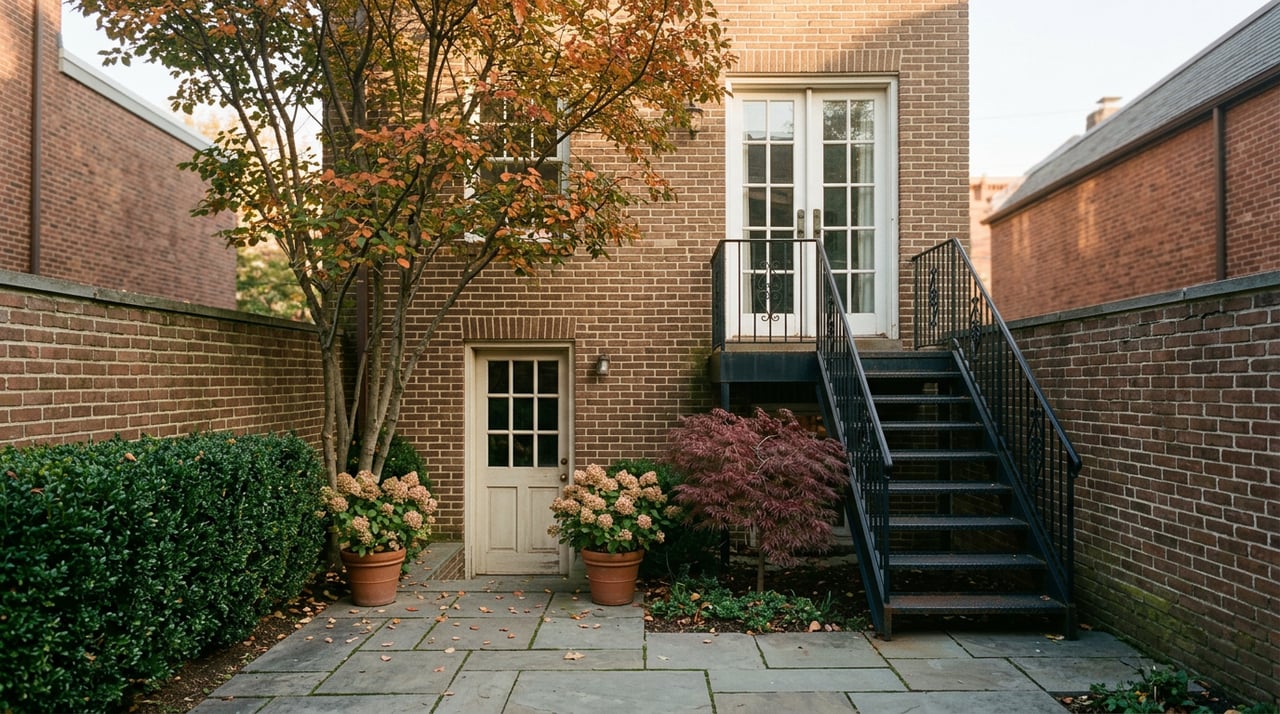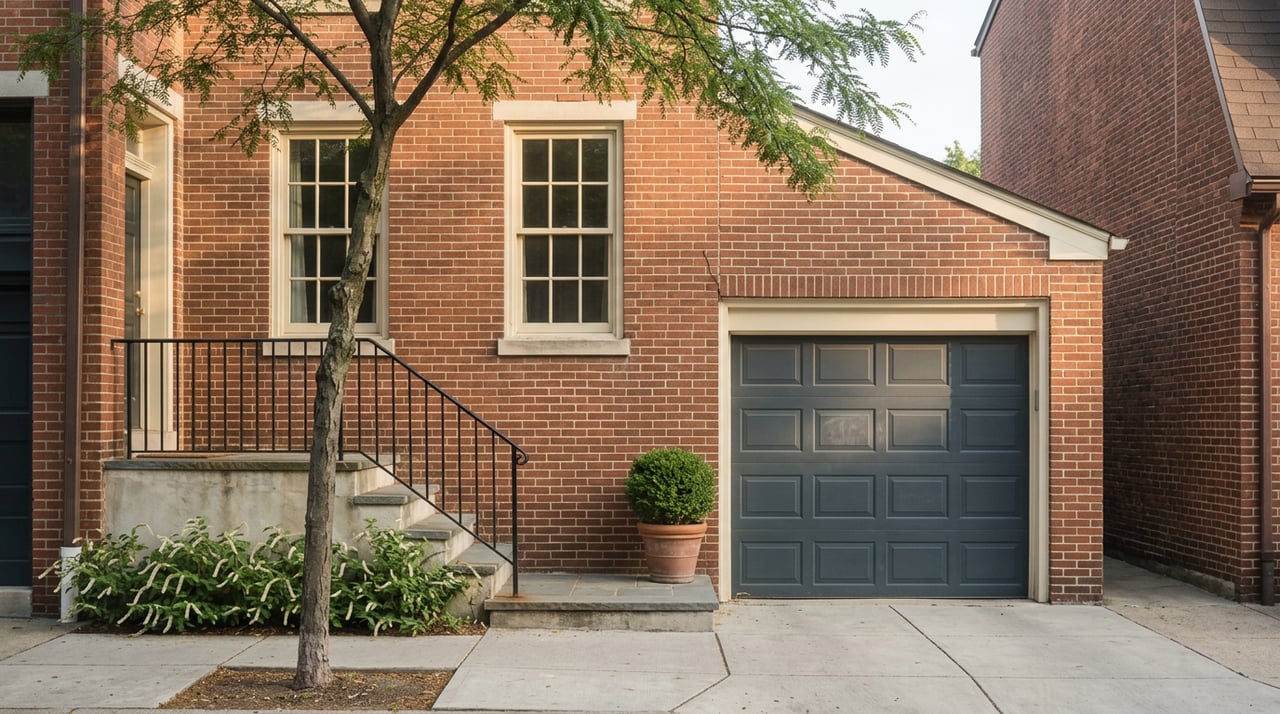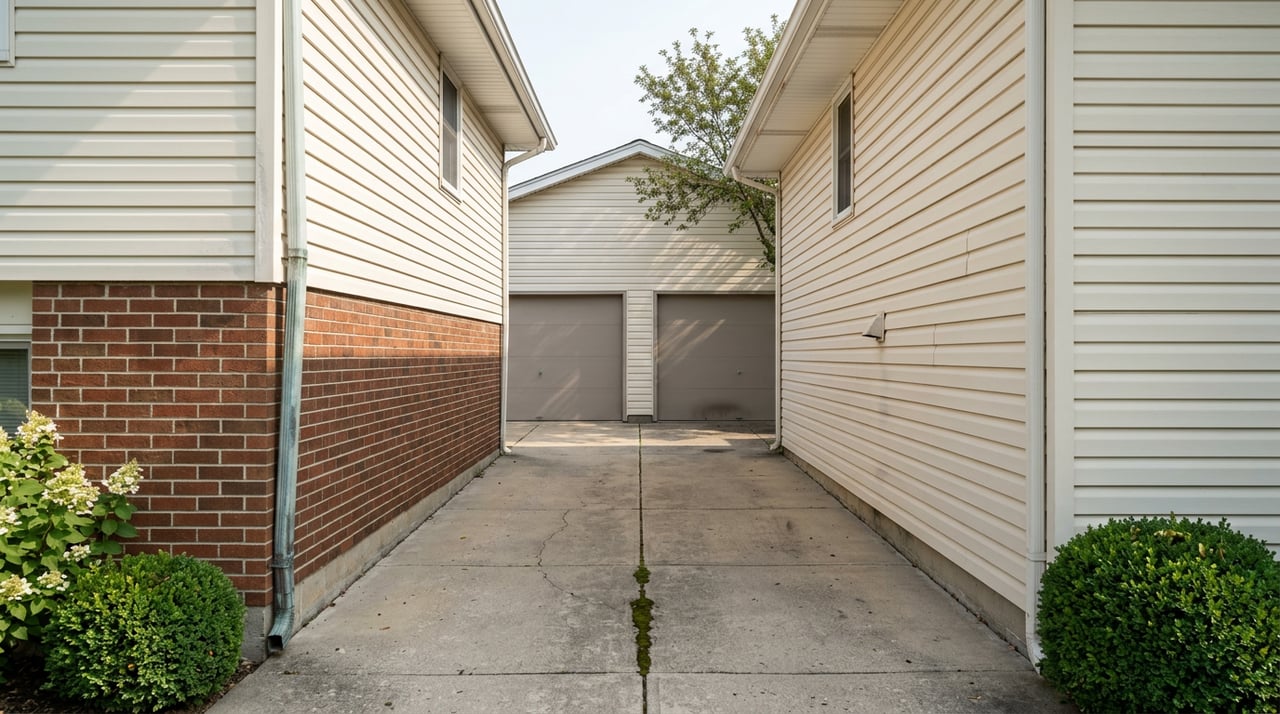
It's a Tuesday afternoon on one of Staten Island's older blocks, the kind with twin homes set eight feet apart and a single strip of concrete running between them. A contractor is mid-measurement for an above-ground pool when he stops, looks at the property line, and asks the homeowner a question nobody has asked in forty years: who actually owns that side yard, and did anyone ever write it down?
That question, or one just like it, is what stalls a meaningful share of Staten Island closings every year. Not because the driveway is a problem. Because nobody looked at it until a stranger with a survey and a deadline had to.
The line nobody drew straight
Staten Island's housing stock was built in waves, and a lot of those waves predate modern subdivision standards. Twin homes on narrow lots share a center driveway by design. Older North Shore parcels were carved up before anyone standardized setbacks. Detached ranches on the South Shore often carry a utility company's overhead line running along the back of the yard. None of this is unusual, and none of it is automatically a problem. It becomes a problem only when nobody can produce paper proving what everyone already assumes.
The easements that actually cause friction on Staten Island tend to fall into a few recognizable categories:
- Shared driveway easements between attached or semi-attached homes, often set up generations ago and never formally recorded
- Party wall agreements on older attached properties, where the wall itself sits half on each lot
- Utility easements, most commonly a Con Edison strip along a rear or side lot line, which can limit what gets built there
- Drainage easements, where water is legally permitted to flow across one yard for the benefit of a neighbor's
Every one of these can sit quietly on a property for decades without anyone thinking about it. That is exactly the condition that turns into a problem three weeks before a closing.
Where the paper actually lives
The instrument that clears this up, or doesn't, is a recorded document. For Staten Island, that means Richmond County records, which are searchable through NYC's public ACRIS system for anything recorded since 1966. Anything older than that sits at the Richmond County Clerk's Office, not online, and requires an actual trip or a title company pull.
That distinction matters more than it sounds like it should. A homeowner who has lived on a shared driveway for thirty years, with a neighbor who has always been reasonable about it, has no particular reason to go looking at ACRIS. There has never been a dispute, so there has never been a reason to check whether the arrangement is actually documented or just customary. The absence of conflict gets mistaken for the presence of paperwork.
An easement doesn't cost a Staten Island seller anything until the wrong person is the first one to read it.
Two closings, same driveway
Picture the identical physical fact playing out two different ways.
In the first version, a seller orders a survey and a title search before listing, the way you'd check a car's history before trading it in. The search turns up a shared driveway with no recorded agreement, just sixty years of both households using it without incident. The seller's attorney drafts a simple, recordable agreement, the neighbor signs it because there's no urgency and no leverage on either side, and it's filed weeks before a buyer ever sees the listing. The whole thing costs a phone call and a modest legal fee.
In the second version, nobody looks until the buyer's title company does, during underwriting, with a mortgage commitment deadline already on the calendar. Now the same missing agreement is a live issue with a nervous buyer and a lender attached. The buyer's attorney has every incentive to treat it as leverage, not because they're being difficult, but because that's the job: flag anything ambiguous, protect the client, let the seller absorb the cost of resolving it under time pressure. The neighbor, suddenly aware that their signature is worth something to somebody, may not sign for free anymore.
Same driveway. Same sixty years of quiet use. Completely different negotiating position, and the only variable that changed is who found the gap first.
| Easement type | Typical trigger point | What resolves it |
|---|---|---|
| Shared driveway | Title search finds no recorded agreement | New recordable agreement signed by both owners |
| Party wall | Inspection finds shared structural wall, water damage, or a repair dispute | Cost-sharing agreement, often split by the original recorded terms |
| Utility easement | Buyer proposes a pool, addition, or deck within the easement strip | Confirm clearance distance, adjust the footprint, or relocate the improvement |
| Drainage easement | Survey shows water routed across a neighboring yard | Confirm the easement's scope and any maintenance obligations |
What it actually does to price
The honest answer is that a well documented, decades-old easement usually does nothing to price. Buyers and appraisers treat it the way they treat anything else that's been true about a block for as long as anyone can remember. It's priced into the comps because it's priced into the neighborhood.
What moves the number is discovery under pressure. An unrecorded shared driveway that gets memorialized for the first time during a transaction, a utility strip that turns out to block a buyer's planned addition, a party wall dispute that surfaces during inspection instead of before listing, these can shave real value off a sale depending on how much usable land or flexibility gets taken off the table. The mechanism isn't the easement itself. It's the loss of control over the timeline and the terms.
That's the part sellers underestimate. The paperwork was always going to surface eventually. The only question is whether it surfaces on the seller's schedule or the buyer's.
Before you list, in this order
- Order a current survey if the one in your files predates any fence, driveway repaving, or addition on the property.
- Pull whatever ACRIS shows for your block and lot, and if the home predates 1966, ask your attorney about a Richmond County Clerk's Office search too.
- Ask yourself honestly whether a driveway, wall, or yard has ever been shared with a neighbor without a signed agreement behind it.
- If the answer is fuzzy, loop in a real estate attorney now, while there's no deadline and no buyer watching.
FAQ
Does title insurance make this a non-issue? For small, long-standing situations, often yes. Title companies frequently issue affirmative coverage that insures over a minor, well established encroachment or easement so a lender is comfortable closing. Larger or actively disputed situations usually need a real cure, not just coverage.
Is a verbal agreement with a neighbor legally binding? It can create rights over time through continuous, open use, but it isn't reliable protection for a new owner buying the property, and it won't satisfy a title company. Recording the agreement is what makes it enforceable against future owners on both sides.
Does this only affect attached or twin homes? No. Detached homes carry this risk too, most often through a utility company's easement along a rear or side lot line, which can limit where a pool, shed, or addition is legally allowed to go.
Will my lender care about any of this? If the easement affects buildable area, access, or the property's legal description, yes. That's exactly why it tends to surface during underwriting rather than before.
None of this is a reason to worry about listing your home. It's a reason to find out what's already true about it before someone else does the finding for you. A pre-listing title and survey check takes a fraction of the time a rushed one does during underwriting, and it puts the seller, not the buyer's attorney, in control of how any surprise gets resolved.
If you're weighing a sale on Staten Island and want a clear-eyed look at what your property's paper trail actually says before a buyer's team finds it first, Albert Benzaken can walk through it with you. Get a Free Home Valuation and start with a complete picture, not a partial one.